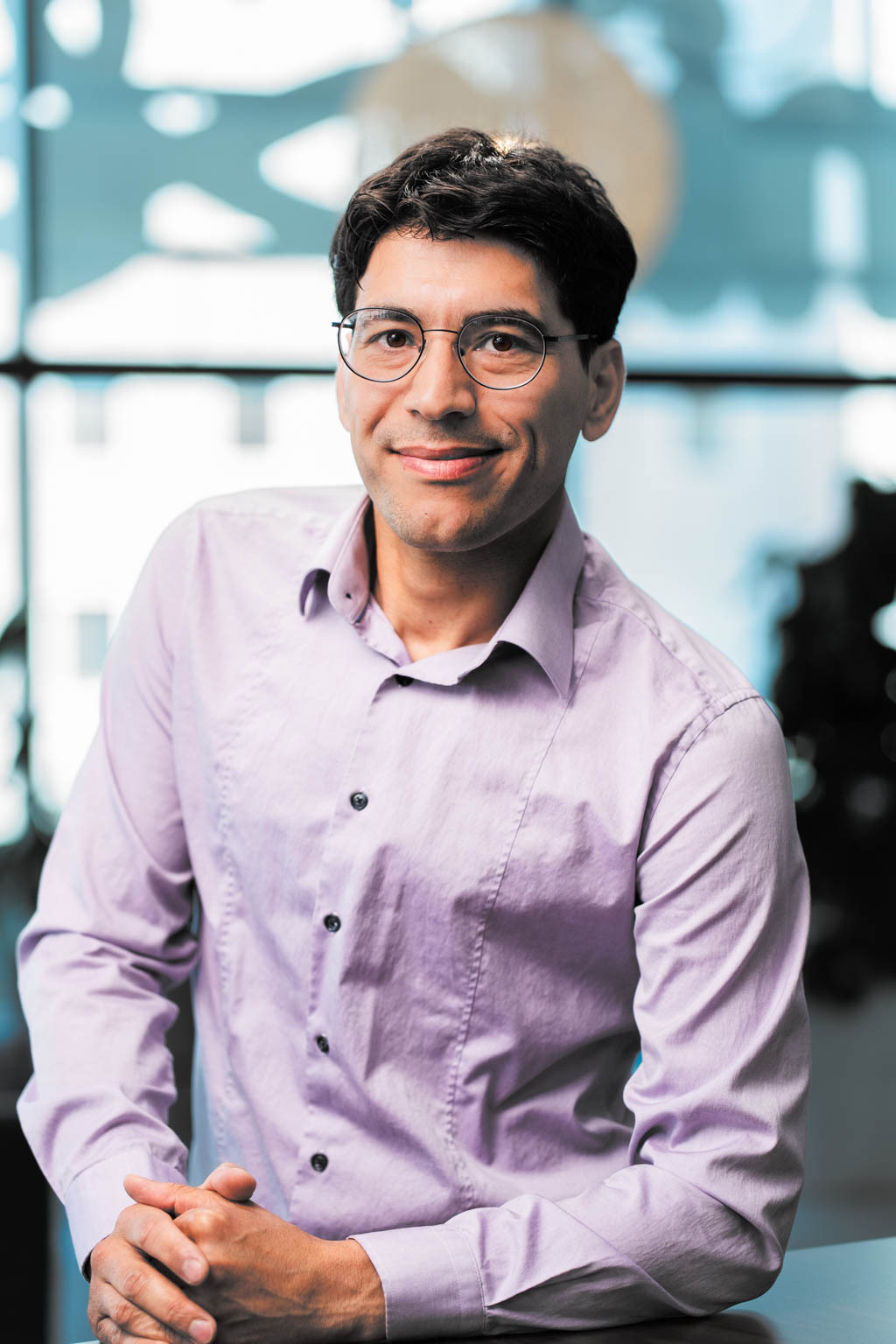
About
I'm a postdoctoral researcher in the Department of Computing Science at the
University of Alberta, working with Dr. Osmar Zaïane and affiliated with the
Alberta Machine Intelligence Institute (Amii).
My research asks how foundation models can make reinforcement learning agents practical
for physical systems. That splits four ways: getting language models to write dense reward
functions that actually shape behaviour, understanding where multimodal models succeed and
fail at spatial reasoning, building teacher–student setups where a foundation model's
action advice buys sample efficiency in online learning, and creating agentic frameworks to automate high-level planning and low-level control.
I got here through deep learning for time series. My PhD built sequence
architectures for complex physical systems, interpretable temporal convolution models,
Transformer-based forecasting for early-stage degradation, Kolmogorov–Arnold networks for
time-varying dynamics, and temporal graph neural networks for anomaly detection. Twelve
journal papers came out of asking what it takes to make a learned model of a real,
noisy, sequential process reliable enough to act on.
That question didn't change when I moved to embodied AI — it just got harder. Foundation models or RL agents
are sequence models that also have to plan, choose, and act.
As a Machine Learning Resident at Amii, I built failure-risk prediction
and anomaly detection for a commercial vehicle fleet, end-to-end on Azure. I currently
mentor several graduate students and research assistants at the CS Department at UAlberta.
- Position
- Postdoctoral Researcher, Computing Science
- Institution
- University of Alberta | Amii
- Advisor
- Dr. Osmar Zaïane
- Location
- Edmonton, Alberta, Canada
- PhD
- University of Alberta, 2026 — deep learning for modelling and anomaly detection in dynamical systems
- Open to
- Research collaborations, faculty and industry research roles